July 30, 2015
I got in the taxi this morning and Jen (a legal fellow) asked how yesterday had turned out. I paused. I didn't know where to even begin. All I could muster was a fatigued "good." Jen has been here several months already, so I knew she understood. She handed me half of her peanut butter and jelly sandwich-- I couldn't have been more thankful. Nothin' quite like the comforty goodness of a genuine PB&J.
So, yesterday. Yesterday I accompanied our Aftercare team and Senior Attorney to the aftercare shelter (where the rescued boys have been living) and then to Ho, the capital city of the Volta Region. Our team was facilitating the reunion of three of the rescued boys with their families. Two additional boys were coming along for brief meet ups with their families before returning to the shelter.
Tracing. After boys are rescued, concerted efforts are made by DSW (the Department of Social Welfare) and our Aftercare team to locate each boy's biological family. Many boys are trafficked to the lake from far away villages and haven't seen their families in years. So tracing families is often like searching for a needle in a haystack and can take months. Often, the only thing the Aftercare team has to work from is a name and a district given to them by the boy.
When a family is located (sometimes quite miraculously), DSW and Aftercare conduct interviews and in-depth assessments of the home situation to determine if the family is fit to care for the boy. In some cases, the boys' families were involved in their trafficking, and the boys themselves speak of their parents as wicked people. The private aftercare shelter where the boys have been placed will be their home until a safe and stable permanent placement can be found.
That "A" Team. I don't know everything that the Aftercare team does, but I've gotten to tag along with them several times and WOW. They are an amazingly gifted group of professionals who I have seen work tirelessly on behalf of each boy. They know each boy well and the boys love them. This reunion between the boys and their families was the result of months of searching and interviewing and preparation. This was a big day.
We left the aftercare shelter early in the morning with the five boys to make the 3-4 hour journey to the Volta Region. The day was a mish mash of emotions and experiences. It was happy and sad, glorious and heartbreaking, exhausting and energizing-- all rolled into 17 hours. Add some hugs and tears and singing and puking and you've just about got the idea.
I would argue that I had the best job of everyone on the trip as I got to hang out with the boys all day. One by one, they met with our team, DSW, the police, and their parents. I spent most of the day happily sandwiched between the two youngest boys as they wrote in colorful new workbooks. (And let me tell you, their attention spans are LONG.) One of the boys didn't know a lick of English six months ago. Now he was succeeding fabulously with his letters.
I wish I could show you their pictures and the video of them chatting away. Take my word for it: Cute with a capital "C."
After three bittersweet goodbyes and some pretty teary eyes, we were ready to head back to the shelter. About 2 hours into the trip, one of the remaining two boys started to sing and then slowly the van became quiet. That boy's mother had failed to show up to meet with him. So sad. I looked back and saw the boys were both asleep, using each other as human pillows.
The whole experience evinced a feeling in me that it was a day I had truly lived. I had witnessed an amazing part of these boys' stories, and I had seen justice, hope, and joy with my own eyes. It was more than I could fully take in-- it still is.
As a member of the Aftercare team debriefed the staff the next day, he commented on the clear care and concern demonstrated by DSW and police-- an encouraging development. As an "issue" of child labor it may be easy for officials to misunderstand or dismiss, but as my colleague said, "Once you meet the boys you will never be the same."
Truth.
P.S. You may be wondering...
How do boys end up on the lake in the first place?
There are many ways a boy can end up in forced labor/ slavery on Lake Volta. Poor villages along the coast of Ghana are prime targets for traffickers. Families are incredibly poor, and often have already engaged their very young boys in fishing from the ocean shore. Traffickers take boys from these communities to one of thousands of villages on Lake Volta to work for them or for another boat master. The kids endure neglect, trauma, starvation, and sleep deprivation. Some traffickers are members of the extended family or acquaintances of the family who use deception to gain consent of parents-- promising that the boy will be taught a trade and attend school. Other boys are taken on school holiday to work but are never returned. Such a boy is essentially lost to the parent who may spend years searching for him. Sometimes parents willfully sell their child to a trafficker-- ridding themselves of a mouth to feed and gaining much-needed income in the exchange.
What is the cultural attitude toward child labor?
What seems very obvious to an outside observer is that trafficking and exploiting a child to work everyday on a lake in a small wooden boat is not only dangerous, but unethical. Seven year old boys should be learning their alphabet, sleeping 10 hours a night, and skinning their knees on the playground. But in many parts of Ghana, cultural norms are such that many don't blink an eye at child labor-- even the most abominable forms like we see on Lake Volta. Why? It's been part of the way things are done for many, many years. It's economical and easy to put children to work. Children are not children, they are cheap labor. They have no rights, no intrinsic value, no legitimate needs.
So the culture and the law are in conflict. What next?
Well, great question. Enforcing the law is crucial. Right now, impunity is change's worst enemy. The risk of using children in labor has to be greater than the reward. We believe that over and above other strategies, deterrence through prosecutions is the best and most efficient answer to those who choose to enslave children. You can't teach it out of perpetrators or negotiate your way to better behavior. Perpetrators must hear and see the great "NO." Step by step, Ghana will get there. It's a lot to change--a time-worn mindset isn't easily undone. And so we pray and we continue to move forward, even if by inches. We look forward to the day when no one would dare use a child on Lake Volta.
grateful.
alayna.
Showing posts with label Human Rights. Show all posts
Thursday, August 6, 2015
Friday, July 10, 2015
I met them on a Tuesday
Tuesday, July 7, 2015
Today I got to meet the rescued boys. Three months ago,
all of them were engaged in hazardous forced labor on Lake Volta. Today they are
in a shelter where they are fed, clothed, and cared for by professional and
caring staff. They go to school and have regular meetings with a counselor. They
play. And dance. And sing.
And finally, they are safe.
As
the legal team loaded in the van this morning to drive to the shelter, I felt
as if I'd been waiting forever for this moment. I've spent the last few
weeks pouring over transcripts of the boys' post-rescue interviews, needs
assessments, and summary reports that our aftercare specialists put together. For every document I read, I would find their picture and match a face to the story.
I've been working with our case management system, pulling out legally relevant facts from these documents and matching them with suspected perpetrators and elements of relevant crimes. I learned a lot about each of the boys-- their family history, how they ended up at the lake, their opinions of the people in their lives and their feelings about being off the lake. I also read about the trauma and abuse each of them had suffered. The missing piece: I hadn't actually met any of them. Until today.
Even with my legal understanding of human trafficking and the 'worst forms of child labor,' I wasn't completely prepared for what I read. The boys had spoken of the fear they had of storms on the lake, diving into the water to untangle nets, and witnessing others drown.


They had recounted waking up at 1 o'clock in the morning to set nets-- six days a week. They spoke of being beaten by their masters and suffering from sickness, severe injuries, and hunger. Some should be in kindergarten, others in high school. All had been doing this for at least a year. Some had no memory of their previous life or biological family, while others remembered their past and their trafficking vividly.
At
the end of one interview that I read, one little boy expressed how excited he was to
be off the lake because now he could go to school and realize his dreams. Like many
of the boys, he had never been in school. Today, I got to meet him.
As
I sat in the office of the shelter's director, I turned my head to see a boy looking at me through the open door. He
stood at a distance with a big toothy smile across his face. I recognized him right away. I gave him a quick wave. He waved back, and for a moment I
thought he might have mistaken me for someone he knew. But as I left the office a few minutes later to join the boys in the courtyard, he came
right up to me with a kind of eager shyness and another big smile. I introduced
myself and extended my hand. He told me
his name, and all I could think was, "Yes, I know exactly who you are!" I found out he likes soccer and that we share the same favorite local food.
I got to observe his English class after the break, and I watched as he sat quietly and attentively with his notebook open in front of him. At one point, the teacher wrote a letter on the whiteboard and asked "What letter is this?" He raised his hand and gave the correct answer, turned around and looked at me-- beaming. I gave him the biggest, proudest smile in return.
Wow. As I walked
out of his classroom several minutes later, uninvited tears welled up in my
eyes. Go get those dreams, dear one. Go get 'em. I
looked out the window that overlooks the grounds and prayed for all the boys. These boys
are walking miracles to me, and I felt beyond privileged to be with them today.
"Surely the arm of the Lord is not too short to save, nor his ear too dull to hear." Isaiah 59:1
Tuesday, June 16, 2015
The Scoop
Akwaaba! I am in Ghana for the summer working for a global human rights organization. Here's the SCOOP!
Who: International Justice Mission
What: Global team of lawyers, social workers, and
investigators
When: Founded in 1997 by Gary Haugen
Where: 18 Field Offices in Africa, Latin America, and Asia
Why: Inspired by God's call to love all and seek justice
How: Partnering with local authorities to:
- Rescue Victims
- Bring criminals to justice
- Restore survivors
- Strengthen justice systems
Here in Ghana, IJM is working specifically on cases of forced child labor/ slavery in the fishing industry on Lake Volta.
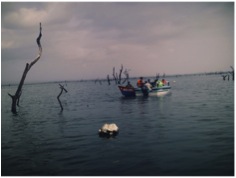
The largest man-made lake in the world, Lake Volta's shoreline is 33,554 miles and is home to 1,232 fishing villages constituted primarily of impoverished rural communities. The National Fisheries Association of Ghana estimates that 80,000 fishers and 20,000 fish processors and traders work on or near the lake.
According to a Ghana Statistical Service study, tens of thousands of children work on Lake Volta. In 2013, IJM investigators spent weeks undercover-- documenting the harsh conditions that children as young as four endure. They found that as many as 60% of the boys they came into contact with were slaves. Many of the boys had been trafficked from villages hours away.
"It quickly became quite easy--and heartbreaking-- to spot the boys who were being held as slaves," one Senior Investigator remarked.
"The boys held as slaves wore torn, dirty and ragged clothing. Many wore no clothes at all—nothing. Most of these boys had distended stomachs, skin diseases, hair falling out, and open sores and wounds. Some were openly crying as we approached. Others looked completely exhausted and their eyes, vacant of emotion." To read the Investigator's reflections, click here.
So how EXACTLY does IJM combat forced labor slavery?
We will rescue children from slavery in the fishing industry by
helping law enforcement locate children being held as slaves, and will work with Ghanaian police and anti-trafficking forces to rescue them and bring them to a safe place.
We will bring criminals to justice by supporting law enforcement
partners to collect evidence and by assisting public prosecutors asthey take traffickers and criminals to trial for slavery crimes under Ghanaian law.
We will restore survivors by helping them heal from the trauma and
finding a safe place where they can thrive—either back home withtheir families or in a shelter where they will receive an education
or training. We will work with aftercare providers and other NGOs already on the ground.
We will strengthen justice systems by equipping Ghana’s antihuman
trafficking unit and law enforcement agencies to investigate andrespond to child trafficking, and strengthening the coordination
between law enforcement and social services that is essential to successfully prosecuting traffickers.
IJM has completed one operation already. Stay tuned for that story...
In the meantime, here is a "must see" TEDtalk:
"The hidden reason for poverty that the world needs to address now" by Gary Haugen, IJM President and CEO (with over 1 million views).
alayna.
Subscribe to:
Posts (Atom)