Showing posts with label Accra. Show all posts

Wednesday, July 8, 2015

My head is hard and I won't marry you


I am looking forward to a couple upcoming blog posts about my internship and about meeting the nine boys who were rescued off the lake in March.  Because of the sensitive nature of our casework, I am having drafts reviewed before I publish them.  In the meantime, here are a couple recent "life as I know it" moments....


Concussions are rough.  Two Saturdays ago, I thought I'd go for a run in my neighborhood.  It was about 10am.  It was warm, but I thought "Meh, I'll be fine."  So I took off through the streets, greeted along the way by kids and adults alike.  As I passed one guy, I got a "You look tired."  Thanks, dude.
My neighborhood, Labone.

Okay, I admit. It was dang humid.  I got home, got a slight headache and then...bam.  The next thing I know I am on my back, coming back to consciousness.  I realized I had fainted and had hit my head on the cement floor as it was throbbing like nuts.  I 'what'sapped' a couple pals who came and peeled me off the floor (okay, a slight exaggeration). I felt like a wilted vegetable.

I spent the next 3 hours in a semi-catatonic, mildly nauseous state, waiting for the periodical "don't fall asleep" as I sipped a homemade pineapple smoothie.  I slept for two days, was foggy for one and then was good to go. Lesson learned: Run at 6am. No later.

 Hot and humid this rainy season.


"You are marriage?"  It's not an uncommon question for a white girl in a taxi.  Basically, I take taxis everywhere.  Conversations with taxi drivers don't happen all the time, but when they do it's not boring.  Everything from dust storms to language lessons, Obama, gay marriage, and Jesus come up in taxis.  So do marriage proposals.  This time I was leaving the grocery store, and a parked taxi driver calls out to me as I walked toward him.

Grocery store in Osu.
I told him where I needed to go-- remember: no addresses, just landmarks.  So, in my slow, staccato American-Ghanaian accent, I say, "Ah, do you know Labone? G4S?"  I am in luck. He does and then the bartering begins:
Me: "How much?"
Driver: 10 cedis.
Me (I act appalled- it's part of the game):  "Oh too high! I will go for 6."
Driver (it's his turn to act appalled):  "Ohhhhhh..nooo....8 cedis."
Me: "Ah, no.  I never go for more than 7."  He is unconvinced.  I tell him I will go find another taxi.  Driver: "Wait, what is your name?"
Me (in my head): Ha! No way, man. But now I have another bartering chip.
Me: "If you take me for 7 cedis, I will tell you my name."


I win. I thought.  I hop in, introduce myself.  His name is George and from Accra.  Then....
George: "You are marriage?"
Me: "Am I married? No, I am not married. I have a boyfriend."
George: "If you decide to not go with boyfriend than I will marriage you. I like to marry a white woman." 

Now a veteran at the "are-you-marriage" conversation, I begin my inquisition... and my "yes, I'm sure I can't marry you." Where would we live? Why should a white girl marry you?  Do you ask every white girl who gets in your taxi to marry you? Why do you want to marry a white girl?

George's stated answer to my last question surprises me: "White women don't cheat. Once a white woman tells you she loves you, everything is fine." 
Fascinating generalization.  I do my neighborly duty and tell him that white women with rings on their fingers cheat too.  Sorry to burst your bubble, George.


Off to bed.  Gotta run in the morning... and catch a taxi. 


grateful.
alayna.


Wednesday, July 1, 2015

Recipe: Easy Peasy Plantain Chips


Plantain chips are kind of a big deal around here.  And boy oh boy are they addicting!  Charity (our angelic house help) happily agreed to show me how to make them--the Ghanaian way.  Woot woot!  They're easy peasy and super yummy. Enjoy!


What you'll need:
  • Plantains (green are best, but ripe will work)
  • Vegetable oil
  • Strainer
  • Two small bowls/ containers (one for oil drips, one for finished plantains)
  • Salt and water
  • Saucepan
  • Slotted spoon 

    Oil (save it and reuse it) and salt
1.  Fill small bowl / container with water and salt.
2. Slice plantains (circles or strips work.)  
3. Soak in salt water for a few minutes.
4. Heat oil in saucepan on stove.


4.  Carefully drop soaked plantains into hot oil.  Careful, it's a hot job!

5.  If the plantains are ripe, they will stick together and stay pretty soft as they cook.  Ripe ones will also brown quickly.  Remove before they get this dark:

6.  Use your slotted spoon to remove from oil.  Place in strainer.  Let cool.

Wah la!

While they're great as is, they're also good with hummus.
Cooked plantains are a good source of vitamins A, B6, and C, as well as potassium, and magnesium.  Not taking into account the oil, they are 97% carbs, 2% protein and 1% fat.

Friday, June 26, 2015

A lot of Accra and a little reggae


My roommate is in the kitchen cutting up fruit....  (Think: the biggest mango you have ever seen.  Add some pieces of pineapple) ....SCORE! Out comes a full bowl for me!  Yesssss.....Even the watermelon is good (and I don't like melons.)  So join me for five glorious minutes while I eat this bowl of tropical goodness and fill you in on a few of my favorite cultural tidbits from two weeks in Accra.


I wasn't sure what to expect from big city life in West Africa.  My past experience in Africa was in RURAL areas.  Living in Accra (pronounced uh-CRAW), the capital city of Ghana, has been a pretty easy adjustment in comparison.  Nonetheless, there has been a lot to take in!


The city of Accra is 67 square miles and home to 2.3 million people.  Originally centered on British, Danish, and Dutch forts, the city now sprawls with many neighborhoods-- from sections of high-priced high rises and fancy suburban homes to the recently bulldozed slums of Sodom and Gomorrah (no, really, that was the name.)  It's a city of jarring juxtapositions and constant action.

Every commute is a full experience, full of fascinating sights, smells, sounds and even tastes to take in.  Without fail these days, one person in our carpool will pay a cedi for plantain chips while we are stopped at a light and men and women walk amongst the cars. (So yummy, p.s!)  This past week, I sprung for a towel.  Yes, that's right.  I bought a towel from a guy for 2 cedis.  (That's approx. 50 cents).  Toilet paper, sim cards, groundnuts (way better than peanuts), gum, and windshield wipers are also usually available. 

Groundnuts

June and July are the rainy season here, which means it has cooled off considerably in recent weeks.  The breezes off the ocean are to die for, and while the sky often threatens rain, we haven't had any monsoon-status rains in weeks.

I live in Labone (see above right).


Okay, so here are a few "city life" cultural things that I find pretty interesting:

Lesson #1. Obrunis (white people) get honked at A LOT. Don't think it's a cat call or a warning or simply because you're cool.  Honking at you is a taxi driver's way of saying, "Pick me! Don't walk. STOP WALKING. You neeed me to drive you!!" (Most drivers honk once or twice.  The record so far though, 8 times. Oh yeah, hissing is a thing too-- it's not mean, just a "hey, you!")

Lesson #2.  When you are eating in the presence of others, one should invite them to eat your food with you.  "You're invited," is all you gotta say.  Kind of love this one-- it's reflective of the communal, "my resources are your resources" way of life.

Lesson #3.  Addresses and street names are irrelevant pieces of information when trying to get from place to place. It's all about landmarks and neighborhoods. That's ALL. 
Having good friends who are also drivers can keep you on the "cutting edge" when it comes to directing other taxi drivers to your destination.  By the way, get your barter on.


While living in Accra has its own set of norms, some things about city living remind me of life in my Tanzanian village-- namely, the friendly, beautiful people, the high value placed on respect for your elders, and the love of bright colors, music and dancing.  This kid was willing to show us his moves:


Speaking of dancing, last weekend some friends and I spent a couple days at a beach about an hour outside of Accra called Kokrobite.  The highlight was a surfing competition with surfers coming from the local village, the Ivory Coast, and Togo. There were even some Obrunis from Down Under.


Every Friday night in Kokrobite, one of the resorts, Big Millie's Backyard, hosts a crew of dancers who show off mind-boggling Ghanaian dances.  It's captivating, loud, spirited, and everyone seems to have the rhythm in their bones.  


On Saturday nights, even after a torrential downpour, a reggae band shows up and brings down the house.... err...raises the thatch?  Anyway, dancing in the mud with a bunch of people who love Bob Marley and are out-and-out naturals cuttin' the rug was an unforgettable moment.  Kind of surreal actually. And beyond fun. 


On that note, I'm off to bed.  Long, full, awesome week.  More on that later.  


grateful.
alayna.


Tuesday, June 16, 2015

The Scoop


Akwaaba! I am in Ghana for the summer working for a global human rights organization. Here's the SCOOP!
 

The Basics:

Who: International Justice Mission

What: Global team of lawyers, social workers, and 
      investigators

When: Founded in 1997 by Gary Haugen

Where: 18 Field Offices in Africa, Latin America, and Asia

Why:  Inspired by God's call to love all and seek justice

How: Partnering with local authorities to:
  • Rescue Victims
  • Bring criminals to justice
  • Restore survivors
  • Strengthen justice systems   


Throughout the developing world, the threat of violence is part of everyday life for the poor.  The poorest are so vulnerable because their justice systems don't protect them from violent people.


Here in Ghana, IJM is working specifically on cases of forced child labor/ slavery in the fishing industry on Lake Volta. 


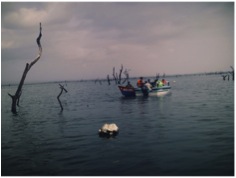
The largest man-made lake in the world, Lake Volta's shoreline is 33,554 miles and is home to 1,232 fishing villages constituted primarily of impoverished rural communities. The National Fisheries Association of Ghana estimates that 80,000 fishers and 20,000 fish processors and traders work on or near the lake. 
 
According to a Ghana Statistical Service study, tens of thousands of children work on Lake Volta. In 2013, IJM investigators spent weeks undercover-- documenting the harsh conditions that children as young as four endure.  They found that as many as 60% of the boys they came into contact with were slaves.  Many of the boys had been trafficked from villages hours away. 

"It quickly became quite easy--and heartbreaking-- to spot the boys who were being held as slaves," one Senior Investigator remarked. 


"The boys held as slaves wore torn, dirty and ragged clothing. Many wore no clothes at all—nothing. Most of these boys had distended stomachs, skin diseases, hair falling out, and open sores and wounds. Some were openly crying as we approached. Others looked completely exhausted and their eyes, vacant of emotion." To read the Investigator's reflections, click here.


So how EXACTLY does IJM combat forced labor slavery?


We will rescue children from slavery in the fishing industry by
helping law enforcement locate children being held as slaves, and will work with Ghanaian police and anti-trafficking forces to rescue them and bring them to a safe place.

 
We will bring criminals to justice by supporting law enforcement
partners to collect evidence and by assisting public prosecutors as
they take traffickers and criminals to trial for slavery crimes under Ghanaian law.


We will restore survivors by helping them heal from the trauma and
finding a safe place where they can thrive—either back home with
their families or in a shelter where they will receive an education
or training. We will work with aftercare providers and other NGOs already on the ground.


We will strengthen justice systems by equipping Ghana’s antihuman
trafficking unit and law enforcement agencies to investigate and
respond to child trafficking, and strengthening the coordination
between law enforcement and social services that is essential to successfully prosecuting traffickers.


IJM has completed one operation already. Stay tuned for that story...


In the meantime, here is a "must see" TEDtalk:
"The hidden reason for poverty that the world needs to address now" by Gary Haugen, IJM President and CEO (with over 1 million views).


 alayna.